
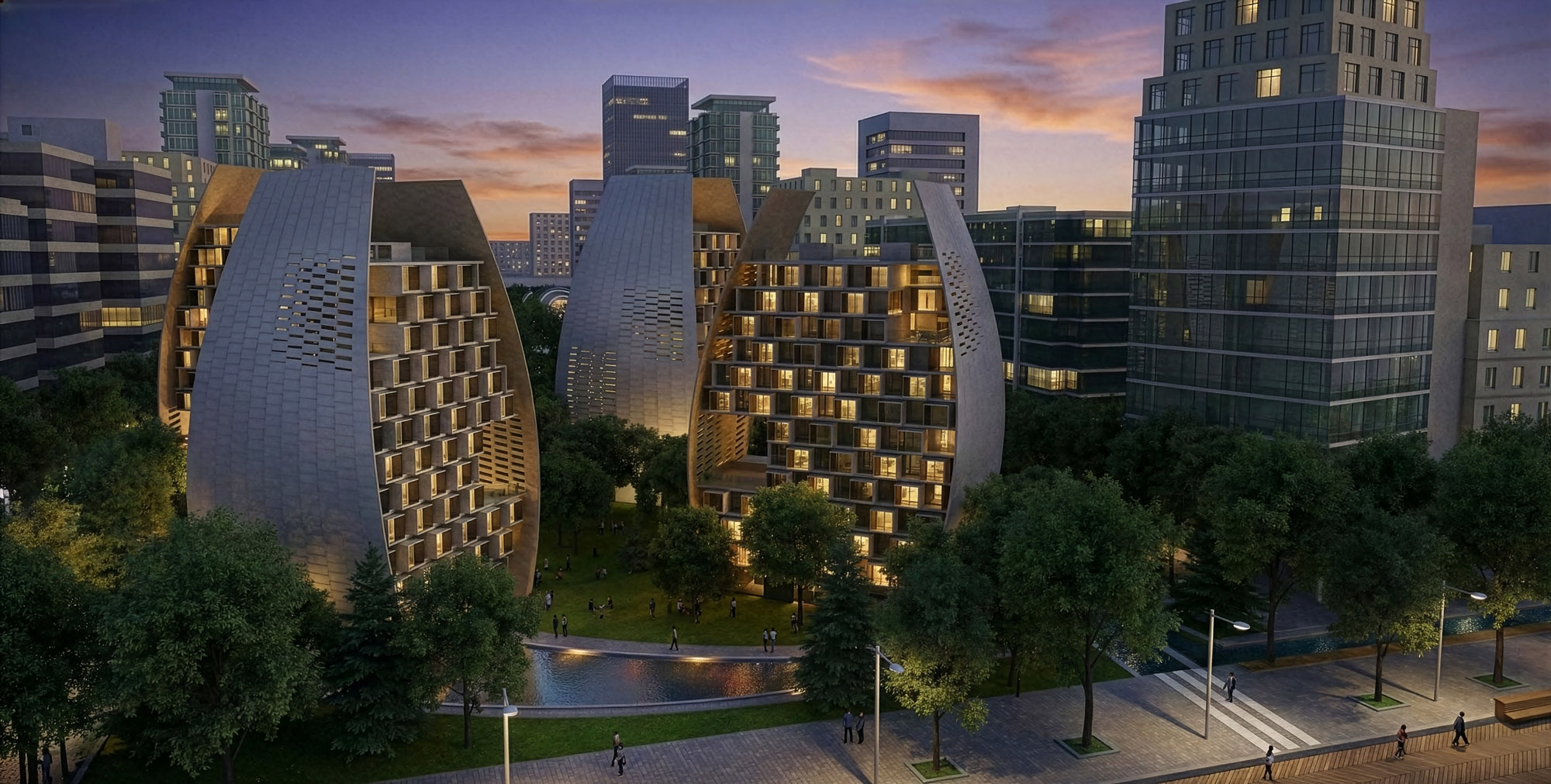
We are frequently asked to define our "style," but we believe true creativity is infinite and shouldn’t be confined by a label. Architecture should burn brighter than the passing flicker of a trend.
Timeless design transcends the temporary by harmonizing the permanent with the ephemeral. While novelty eventually loses its luster, enduring spaces remain relevant by grounding themselves in the essentials: site, climate, and the human spirit. Architecture that simply chases a "look" at the expense of its environment is destined to become a relic of a single moment.
By prioritizing light, shadow, material integrity, and human scale, we craft environments that offer lasting enrichment. These principles are naturally sustainable; they do not shout for attention, but rather command it through a quiet, resolved presence.
What is essential should always outlasts what is merely fashionable.
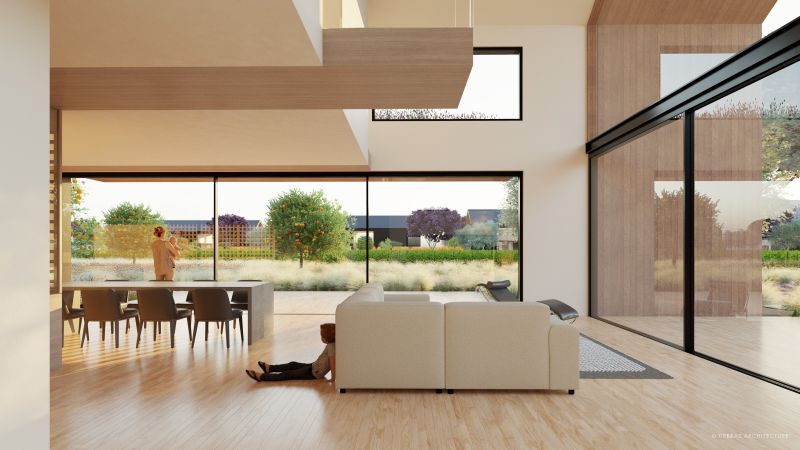
“Perfection is achieved not when there is nothing more to add, but when there is nothing left to take away.”
Antoine de Saint-Exupéry’s timeless observation captures the essence of minimalism. In architecture, in design, and in life, this philosophy becomes an act of distillation, removing the unnecessary until only the essential remains, allowing clarity and purpose to emerge.
A space distilled to its essence makes for a more powerful and impactful one, allowing its whispers to resonate louder and clearer. It’s unburdened by noise and allows architecture to be a conduit to all our senses and unhindered beauty, inside and out.
The misconception about minimalism is that it is cold and uninviting. It is anything but. It shines a light on “essence”, revealing the soul of architecture and engaging ours directly and unashamedly.
At the heart of this pursuit lie two indispensable qualities: humility and restraint.
Humility shifts the focus away from the architect or his architecture’s ego and toward the true nature and experience of a space.
Restraint quiets the impulse to impress, allowing architecture to shine rather than blind.When excess is stripped away, architecture becomes more honest, more direct, and more vulnerable. Its beauty arises not from embellishment, but from authenticity.
Minimalism is shaped as much by the unseen as the seen. In the end, it is not an absence, it is a deeper, clearer presence.
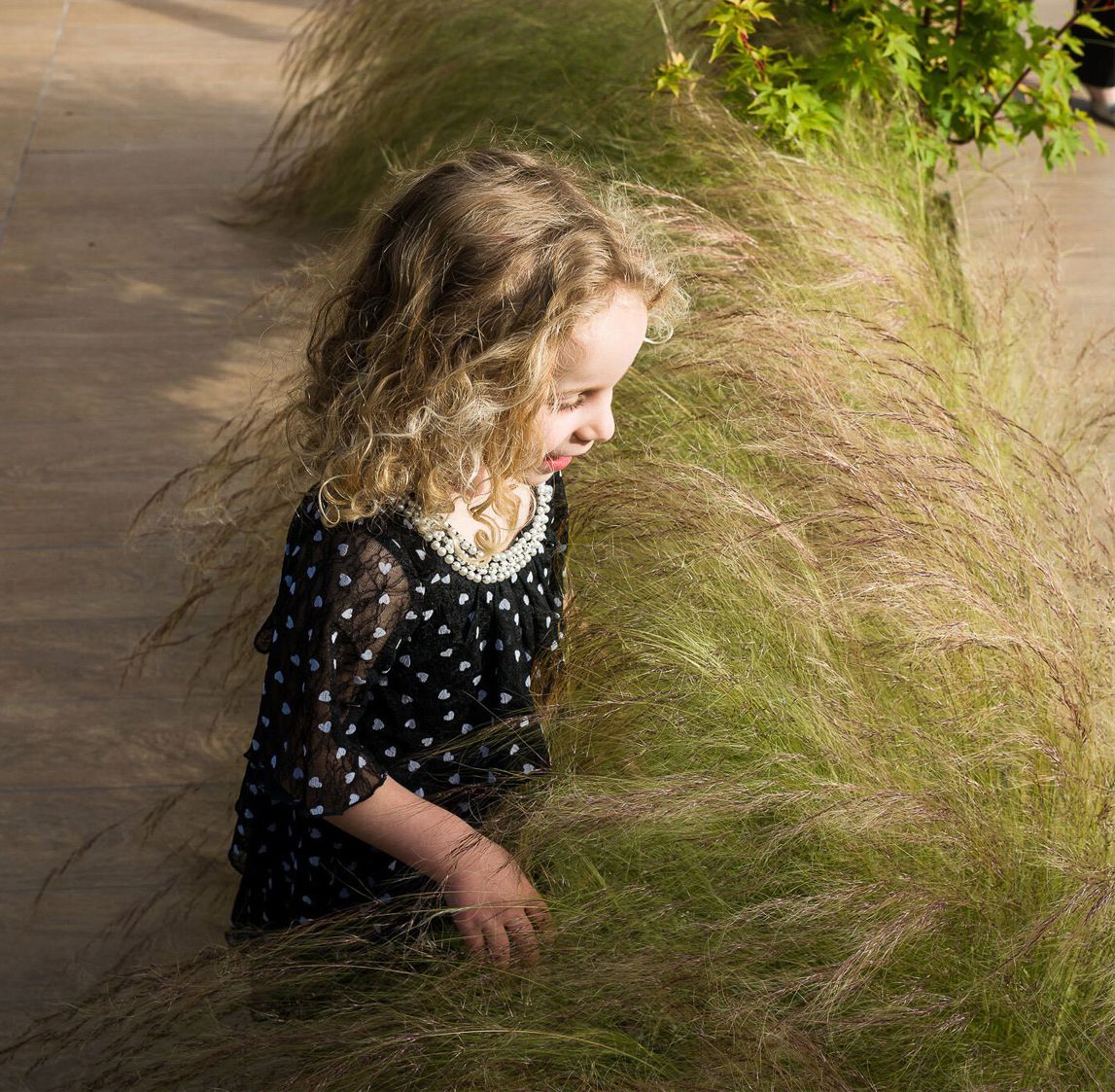
Most of us are taught to associate architecture with our sense of vision—yet the experience of a space is enriched by all our senses. Among them, none is more quietly powerful than smell.
Often overlooked, smell holds a unique, undeniable force. Like time travel, it can transport us not only to a place, but to a feeling, a moment, a memory long tucked away. These emotional echoes, fragments of the past, return us to what is familiar, comforting, and deeply felt.
Unlike sight, scent bypasses thought and goes straight to the heart. It awakens through the layers of a blooming garden, the natural essence of materials within the home, or the aromas rising from a kitchen in search of a favorite meal.In these ephemeral yet lasting impressions, we find solace and belonging, moments that live on in us long after they are first experienced.
When architecture encourages this, it does more than shape space, it shapes memories that linger in us quietly for the rest of our days.
When building, embellishing or enriching your garden or home, embrace the olfactory and at the very least, allow it to enjoy the same reverence you have for your sense of sight.
“When nothing else subsists from the past, smells remain poised for a long time, like souls, bearing... the immense edifice of memory" -Marcel Proust
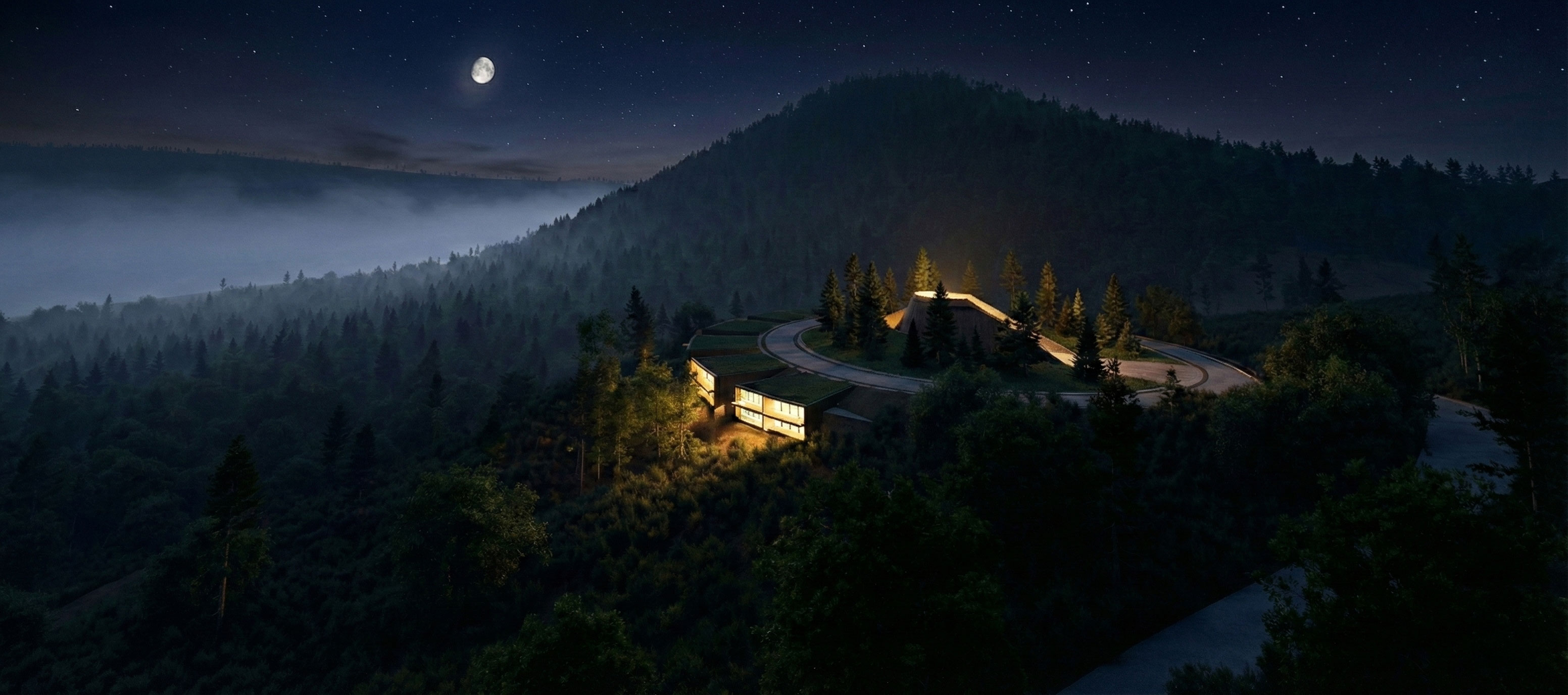
Sustainable architecture is not a buzzword or fleeting trend.
It is a response to an existential reality. The way we build and inhabit the world leaves lasting consequences for the planet and future generations. The Earth is asking to be heard and healed, and ignoring its plea risks the loss of this beautiful, precious, only and irreplaceable home we share.
For centuries, cultures worldwide have shaped their environments in harmony with nature, responding intuitively to climate, materials, and social needs. From cave dwellings to indigenous earthen structures, timber villages to stone settlements, these traditions conserved resources, regulated temperature naturally, and left minimal impact on the land. Modern sustainability, supported by technology and incredible advances in materials and green energy, seeks to replicate, even elevate what these cultures achieved instinctively: integrating human habitation seamlessly into the rhythms of nature.
At its core, sustainable architecture listens to the land. It is about understanding wind, sunlight, rainfall, and seasons and translating that knowledge into functional, enduring spaces. One thing is inarguable—human survival is inseparable from the health of the Earth. By minimizing energy use, harnessing renewable resources, and fostering resilience, architecture becomes more than shelter; it becomes a force for ecological stewardship.
Sustainable architecture is a rational response to environmental realities: efficiency without sacrificing beauty, functionality without harming the planet, longevity without waste. It is not an add-on, a trend or another designation, it is common sense.
Sustainability is sensible architecture, and sensible architecture is built on respect for the planet and the humility to meet our responsibility as its stewards.
The cost of embracing these enduring principles is negligible compared with the ultimate price we risk paying if we continue on a path of passiveness, contempt, ignorance, and arrogance.
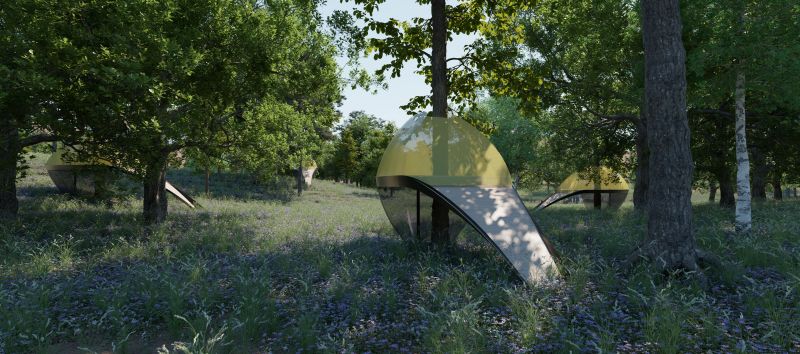
In a world of constant noise, architecture can offer something rare: stillness.
When designed with intention, a space does more than shelter—it quiets the mind, slows the breath, and allows presence to unfold. The thickness of a wall, the placement of a window, the hush of natural materials—these are not aesthetic choices, but emotional ones.
We believe silence is not an absence—it is a presence. It is the soul of a space, and our responsibility is to protect it.
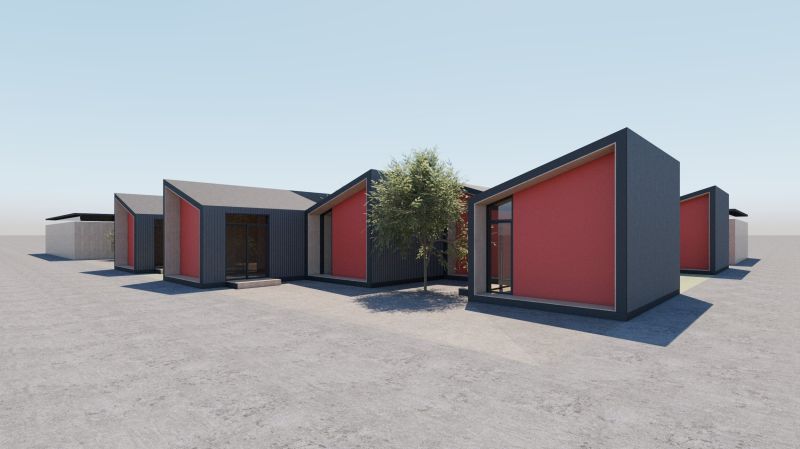
What keeps us curious is not what we can build—but what we can feel.
Every project begins with questions: What does this place want to be? How does light move here?
What kind of silence does this client need? We are less interested in invention than in listening—less concerned with legacy than with presence.
Curiosity is not a spark. It’s a slow fire. Fed by wonder, restraint, and the quiet complexity of life.
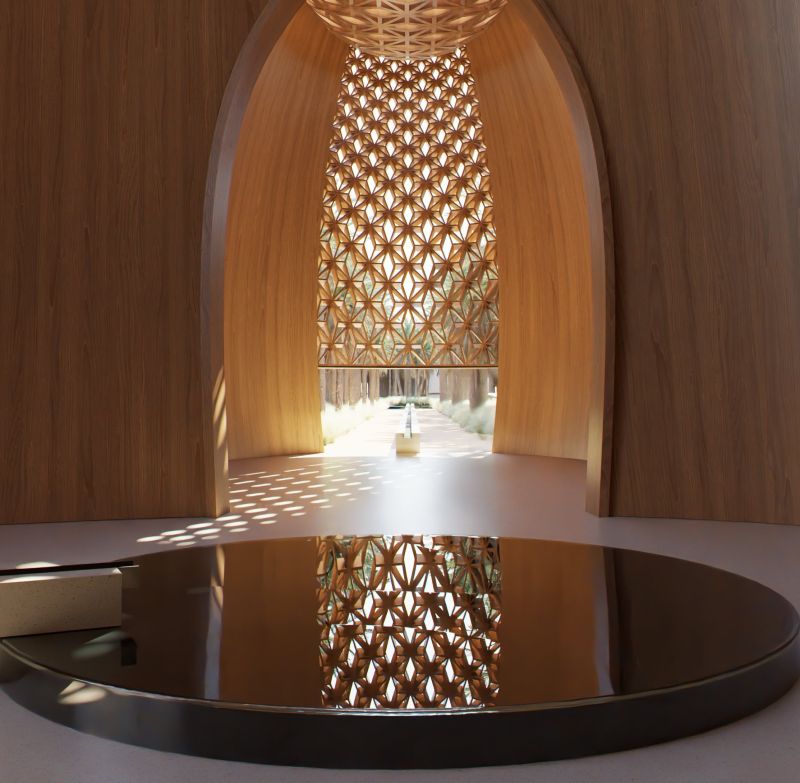
Shedding light onto the most abundant and free Architectural material at our disposal.I am of course talking about natural light. Its relevance carved into my every fiber as an architect, one stroke at a time.
Often taken for granted, it is abundant and free and can elevate Architecture to soul enriching heights. But it can also overwhelm it. Our first instinct when confronted with a dark space is to flood it with direct sunlight. I am sure many of you have experienced its resulting discomfort.
“I saw the angel in the marble, and carved until I set him free”
–Quote attributed to Michaelangelo
Like stone, natural light can be chiseled, carved, and controlled to reveal and enhance both Architecture and Soul.
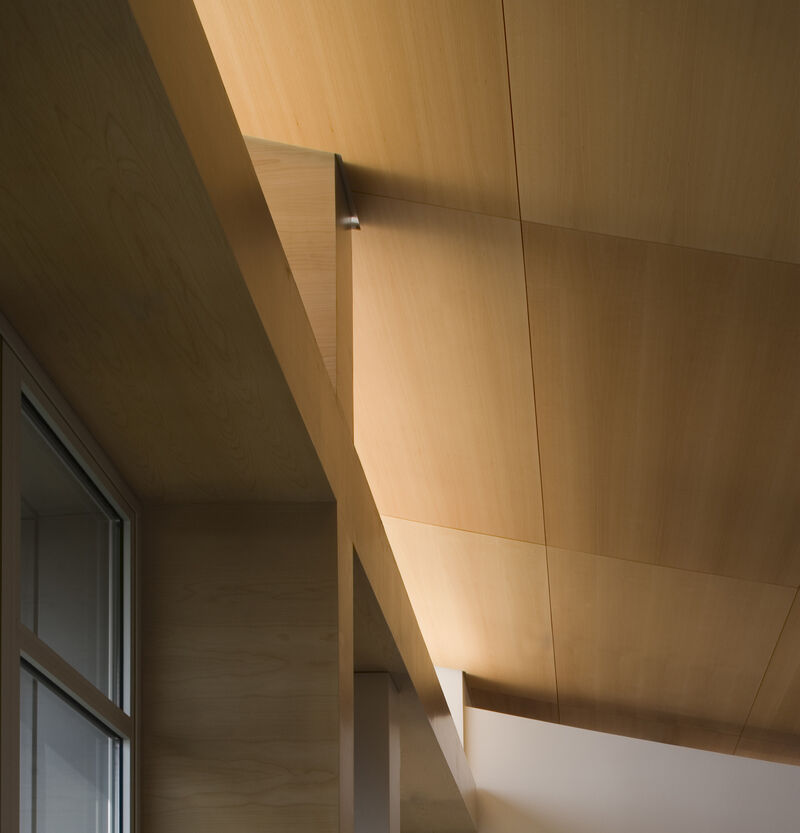
Redirected like a ball off a wall, diffused by a screen or filtered by landscaping, light can, if oriented correctly, become quieter, more discreet and inviting; revealing the true nature and potential of the materials, places and spaces it aims to awaken.
Ephemeral by nature and accompanied by the subtle textures and patterns of its resulting sculpted shadows, I think of it as a gentle embrace that has the power to infuse Architecture with serenity, discovery and wonder.Ultimately, its might lies in restraint, how we embody it, and how it connects us to the natural world and to context.
Natural light is an amazing gift and resource. Let it in sensibly!
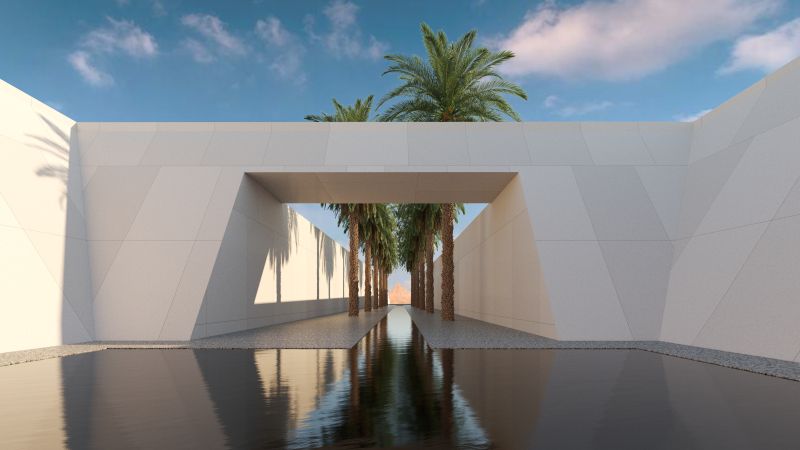
Light reveals, but shadow teaches.
In architecture, shadow is not a void—it is a presence that gives depth, rhythm, and mystery. It softens clarity, extends silence, and invites reflection. The way a shadow stretches across a stone floor or falls gently behind a column—these are moments that stir emotion, not just frame form.
We see shadow as a companion to light. Together, they shape the emotional resonance of space—creating not just buildings, but atmospheres.
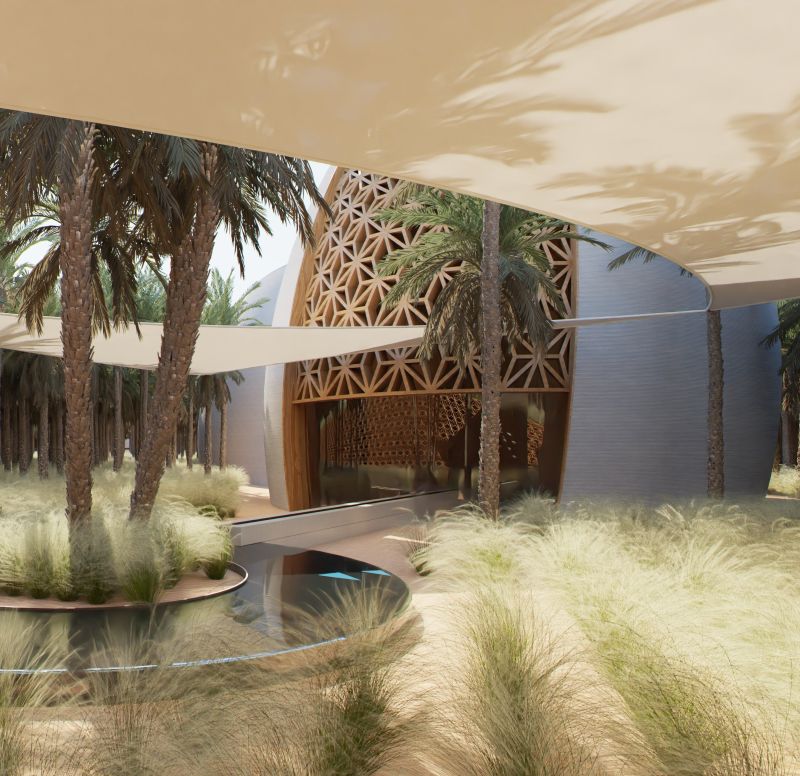
Architecture is not meant to stand apart from nature, but to be seamlessly woven into it. Breathing with the land, rooting itself in what endures beyond time, it is not meant to impose on nature but stand in reverence to it, becoming one with it.
The overlooked beauty of this complicity lies in a simple truth: architecture finds its voice only when it listens to and amplifies the wisdom of the natural world.
When thresholds to the outdoors dissolve and boundaries are blurred, it breathes with greater ease. It listens more attentively to its context and finds solace and serenity in the embrace of nature and the beauty that surrounds us.
What arises is not simply a building, but a rich and sensual sanctuary, one where all our senses are engaged in unison.
Every few years, a project shifts something in us.
A new way to frame the outdoors. A deeper trust from a client. A garden composed not as decoration, but as living canvas.
These aren’t milestones for publicity—they are private markers of growth.
We build slowly. But each step matters.
One 20-minute conversation changed everything I believed about architecture.
When I attended graduate school at UC Berkeley, I had the privilege to meet Sim Van Der Ryn, a visionary who quite literally wrote the book on sustainable architecture.
A hippie at heart, endowed with wonder and genius, he became my mentor. He instilled in me reverence for the natural environment and a spiritual sensitivity that still shapes everything I do.
One 20-minute exchange changed the course of my life.
He asked me, "What kind of buildings do you want to design?"
"Places of worship,” I replied.
“Spaces that embrace natural light, enrich us with serenity, and move us with stillness."
With a smile he quietly uttered, "Charles, my temple is everywhere."
Those words struck me to my core. Since then, I’ve tried to make every space I design a sanctuary for the soul, deserving of the same care, presence, and reverence we give to the sacred.
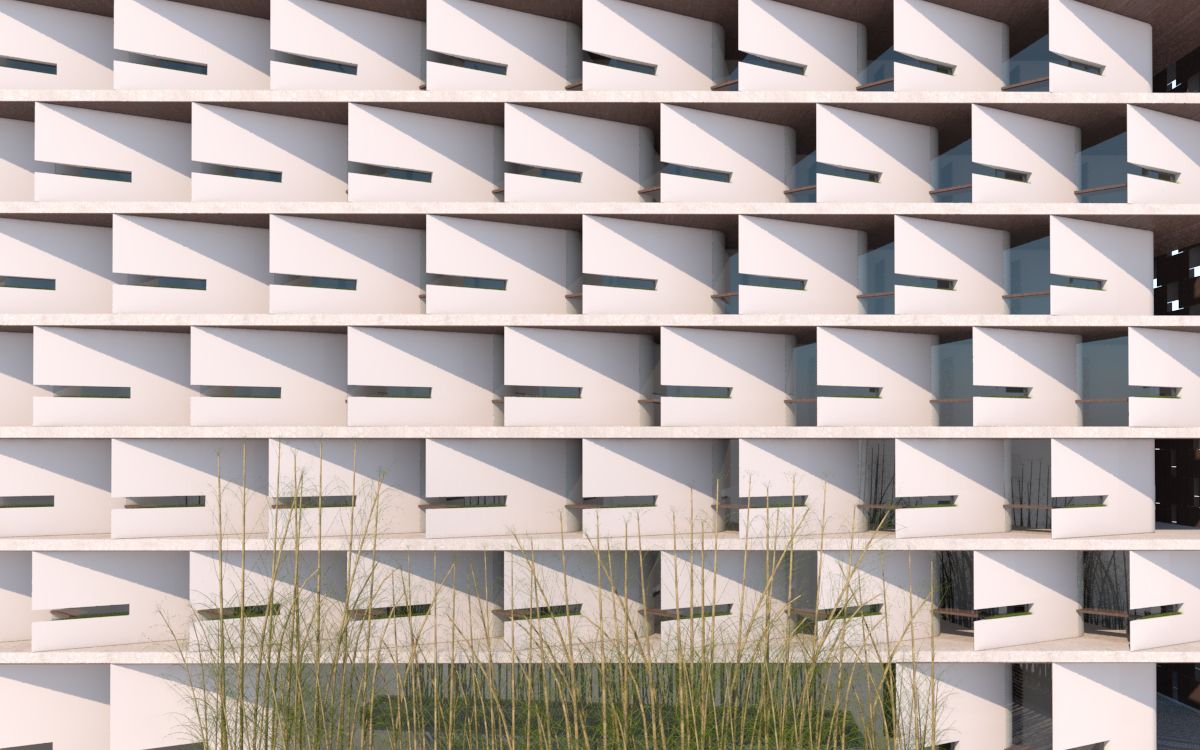
Modular housing has the potential to be both efficient and environmentally responsive—if designed with care.
This concept uses prefabricated units oriented for passive solar performance. Angled facades and narrow openings reduce heat gain in summer while allowing warmth and natural light in during the winter. The repetitive geometry isn’t just about ease of construction—it is about maximizing daylight, ensuring privacy, and improving thermal performance without mechanical systems.We have combined sustainable materials with timeless strategies: cross ventilation, sun shading, and thermal mass.
The result is a modular system that reduces operational energy and enhances the quality of life for its occupants.
We see sustainability not as a feature, but as a foundational principle rooted in timeless design.
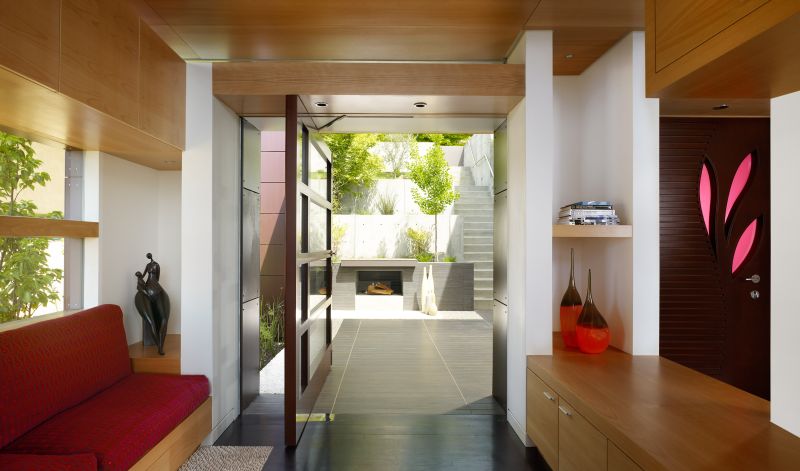
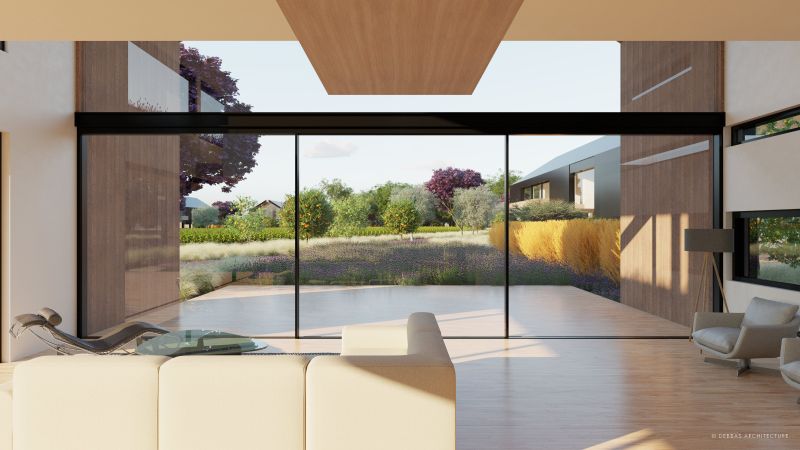
Indoor-outdoor design is not just an aesthetic—it is a way to improve how we live, feel, and connect with our environment.
This courtyard space is a clear example: large retractable doors open the home to natural light, air, and greenery, extending living space without expanding the footprint. Materials like concrete, wood, and stone blur the transition, creating continuity and calm. These design decisions support wellness, reduce energy use, and create more meaningful relationships with nature.
Indoor-outdoor integration is never a feature—it is foundational. We see it as an opportunity to foster presence, sustainability, and a deeper sense of belonging.